If you’re managing SEO for multiple clients, technical reporting can quickly become one of the most time-consuming parts of the job.
Issues need to be gathered from multiple tools, crawl data needs to be reviewed, page performance needs to be monitored, and findings need to be translated into something clients can actually understand. As the number of clients grows, so does the reporting workload.
This is why more agencies are adopting automated technical SEO reports.
The appeal isn’t simply that automation saves time. Most agencies aren’t struggling because they lack data. They’re struggling because turning that data into useful insights takes time, consistency, and ongoing effort.
Automated technical SEO reporting helps bridge that gap by making technical issues easier to monitor, prioritize, and communicate.
What Are Automated Technical SEO Reports?
Automated technical SEO reports are system-generated analyses that monitor the technical health of a website on an ongoing basis.
Depending on the platform being used, these reports typically evaluate:
- Crawlability and indexation
- Core Web Vitals and page speed performance
- Internal linking structures
- Broken links and redirect issues
- Structured data implementation
- Mobile usability
- Technical on-page SEO elements
Instead of manually collecting information from multiple platforms, teams receive a consolidated view of technical performance and potential issues.
The real value, however, comes from what teams do with that information.
1. Reporting Stops Consuming Valuable Agency Time
Every agency eventually reaches a point where reporting starts competing with actual SEO work.
Teams spend hours gathering data, validating issues, building spreadsheets, and preparing client updates. The process is manageable with a handful of clients but becomes increasingly difficult as accounts grow.
Automated reporting removes much of this repetitive work.
Instead of spending time compiling data, SEO teams can focus on analyzing trends, investigating issues, and developing recommendations that improve performance.
For agencies operating with lean teams, this operational efficiency can make a significant difference without requiring additional headcount.
2. Technical Issues Are Easier to Prioritize
One of the biggest challenges in technical SEO is not finding issues. It’s deciding which issues deserve attention first.
A typical audit may uncover dozens or even hundreds of recommendations. Not all of them carry the same business impact.
Automated reporting helps create structure around that complexity by highlighting recurring issues, identifying trends, and surfacing potential risks before they become larger problems.
This approach aligns closely with modern technical SEO audits, where prioritization often matters more than generating longer issue lists.
When teams have clearer visibility into what matters most, resources can be allocated more effectively and improvements can be implemented faster.
3. Reporting Becomes More Consistent
Consistency is often overlooked when discussing reporting.
Manual processes naturally introduce variation. Different team members may evaluate issues differently, use different methodologies, or focus on different metrics.
Automated reports apply the same evaluation framework every time they run.
This consistency makes it easier to:
- Track performance over time
- Compare reporting periods accurately
- Identify meaningful technical changes
- Create repeatable reporting processes across clients
For agencies managing multiple accounts, consistency improves both internal workflows and client communication.
4. Technical Data Becomes Easier to Communicate
Technical SEO data is often difficult for non-technical stakeholders to interpret.
A developer, SEO specialist, and marketing director may all look at the same report and focus on different things.
Well-structured automated reports help bridge that communication gap by organizing information into a format that is easier to understand and discuss.
Instead of reviewing isolated metrics, teams can focus on understanding:
- What changed
- Why it matters
- What should happen next
This improves collaboration between SEO teams, developers, account managers, and clients.
5. Growing Client Portfolios Become Easier to Manage
What works for five websites rarely works for fifty.
As agencies expand, reporting processes often become one of the first operational bottlenecks.
Without automation, reporting effort tends to grow alongside the client portfolio.
Automated reporting creates a more scalable system by allowing agencies to monitor multiple websites without dramatically increasing administrative workload.
This is particularly valuable for agencies delivering white-label SEO reports where consistency and efficiency are critical.
6. Problems Can Be Identified Earlier
Technical SEO issues rarely announce themselves.
A website update, plugin conflict, migration, deployment, or configuration change can introduce problems without immediate visibility.
By continuously monitoring website health, automated reporting helps teams identify potential issues earlier than periodic manual audits alone.
Earlier visibility often means faster resolution and reduced risk.
For example, identifying indexation issues shortly after a deployment is far preferable to discovering them weeks later after traffic has already been affected.
7. Automation Supports Better SEO Decisions
The most important benefit of automated technical SEO reporting isn’t speed.
It’s clarity.
Good reporting helps teams understand what deserves attention, where risks exist, and which actions are most likely to improve performance.
That shift—from collecting information to making decisions—is where automation delivers the greatest value.
It’s also why reporting has become an increasingly important part of modern SEO strategy. Agencies that use reporting effectively are often better equipped to identify opportunities, explain recommendations, and demonstrate progress over time.
For a deeper look at how agencies turn reporting into decision-making, read our guide on SEO reporting.
Who Benefits Most from Automated Technical SEO Reports?
SEO Agencies
Agencies benefit from improved scalability, more consistent reporting processes, and better visibility across multiple client accounts. Automation allows teams to spend less time compiling reports and more time acting on findings.
Freelancers and Consultants
Independent SEO professionals often operate with limited time and resources. Automated reporting helps reduce repetitive work while maintaining visibility into client performance.
In-House SEO Teams
Internal teams frequently need to communicate technical issues to executives, developers, and marketing stakeholders. Automated reporting provides a clearer framework for those conversations.
Automation Still Requires Human Expertise
Automation can identify patterns, surface issues, and monitor performance.
It cannot fully understand business priorities, competitive pressures, organizational constraints, or strategic goals.
The strongest SEO programs combine automated reporting with experienced human analysis.
Technology can help teams move faster, but judgment, prioritization, and decision-making still require expertise.
Conclusion
Automated technical SEO reports are no longer just a convenience for agencies managing growing workloads.
They have become an important part of maintaining visibility into website health, identifying issues early, and creating more consistent reporting processes.
Most importantly, they help teams spend less time gathering information and more time acting on it.
As websites become more complex and client expectations continue to rise, automated reporting provides a practical way to scale technical SEO without sacrificing quality or visibility.
For additional guidance on technical SEO best practices, Google’s documentation on Core Web Vitals and crawling and indexing offers valuable technical references for SEO teams.

Related Articles
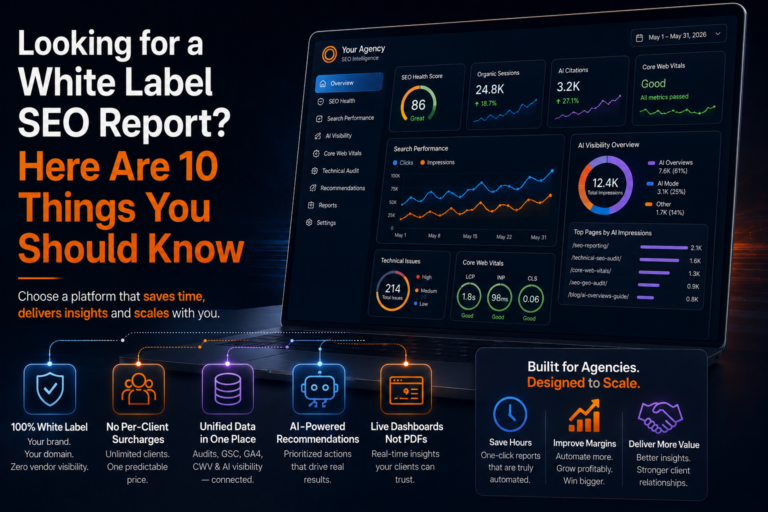
White Label SEO Reports: 10 Things Every Agency Should Know
Most agencies shopping for a white label SEO report focus on the wrong things. They compare pricing tiers,...

How to Create White Label SEO Report for Clients (Without Building Them Manually)
Creating white label SEO report that clients understand requires getting three things right: what goes into the report,...

Speed and Scalability: How AI Accelerates SEO Reporting
AI SEO reporting is helping agencies solve a problem that has little to do with data collection and...
Ready to unify your agency's SEO stack?
Stop juggling 5+ tools for one report. Zensor brings SEO audits, GA4 analytics, GSC data, and AI search tracking into a single platform.