

Revenue-driven SEO reporting should not end with rankings, traffic, or impressions. It should connect organic performance directly to revenue growth and smarter business decisions.
Most agencies still treat reporting as a monthly performance summary instead of a strategic growth engine. The real opportunity lies in transforming search data into executive-level insight that influences investment, forecasting, and long-term planning.
The Real Problem With Traditional Reporting
Traditional SEO reports focus on surface metrics:
- Keyword rankings
- Organic traffic growth
- Impressions and click-through rate
- Technical issue counts
These metrics matter. But they rarely answer the executive-level question:
How is organic search contributing to revenue growth?
When reporting stops at traffic trends, it remains operational. It becomes a recap — not a strategic decision instrument.
What Revenue-Driven SEO Reporting Really Means
Revenue-driven SEO reporting reframes performance data around business outcomes.
Instead of asking “Did traffic increase?” it asks:
- Which organic segments are driving qualified pipeline?
- Which keyword clusters influence high-value conversions?
- Where is organic traffic improving customer acquisition efficiency?
- Which SEO investments generate measurable return?
This shift transforms SEO insights into financial intelligence.
The Three-Level Model: From Metrics to Money
Level 1: Visibility Signals
Rankings, impressions, and demand shifts. This layer identifies opportunity and market momentum.
Level 2: Engagement & Conversion Intelligence
Landing page performance, assisted conversions, and revenue per visitor. This layer connects attention to action.
Level 3: Revenue & Efficiency Impact
Pipeline influence, customer acquisition cost trends, lifetime value contribution, and profitability shifts. Understanding metrics like customer acquisition cost and revenue attribution models strengthens reporting by translating organic performance into financial language.
Modern analytics platforms such as Google Analytics 4 enable deeper revenue segmentation, helping agencies align SEO insights with measurable business impact.
Executive Scenario: When Reporting Changes Budget Decisions
Consider this example:
- Organic traffic increases by 18% year-over-year.
- Conversion rate remains stable.
- High-intent pages show a 32% increase in revenue contribution.
- Customer acquisition cost decreases by 14%.
A traditional report highlights traffic growth.
A revenue-aligned report highlights improved acquisition efficiency and margin expansion.
That insight can justify increased SEO investment — not because traffic grew, but because revenue efficiency improved.
How Revenue Alignment Improves Agency Growth
- Stronger client retention through measurable business impact
- Higher pricing power backed by financial contribution
- Smarter allocation toward profitable keyword clusters
- More accurate forecasting and planning
- Better alignment between marketing and sales teams
When insights influence investment decisions, agencies move from vendors to growth partners.
Common Barriers to Revenue-Centric Reporting
- Reporting traffic without revenue segmentation
- Ignoring assisted conversions in long sales cycles
- Overemphasizing vanity metrics
- Separating search data from CRM systems
- Presenting dashboards instead of strategic narratives
Without revenue integration, reporting cannot influence executive decisions.
Building a Revenue-First Reporting Framework
- Align SEO KPIs with core business KPIs during onboarding
- Integrate analytics, search data, and CRM insights
- Segment performance by revenue contribution
- Track long-term performance trends, not just monthly variance
- Structure reports in narrative order: impact → drivers → actions
This evolution often begins by strengthening your overall SEO reporting framework to ensure every metric supports a business decision.
Why This Matters in an AI-Driven Landscape
As automation increases, dashboards become easier to generate.
Interpretation becomes more valuable.
Technology can surface patterns. But only structured analysis can connect insights to revenue decisions.
Agencies that master revenue-driven SEO reporting will build stronger margins, longer contracts, and deeper executive trust.
Frequently Asked Questions
What is revenue-driven SEO reporting?
Revenue-driven SEO reporting connects traditional search performance metrics to financial outcomes such as pipeline growth, customer acquisition cost, and profitability.
Why does revenue alignment matter in SEO?
Revenue alignment ensures search efforts influence budgeting, investment planning, and executive decisions rather than remaining isolated marketing metrics.
How can agencies implement revenue-focused reporting?
By integrating analytics platforms with CRM systems, segmenting organic performance by revenue contribution, and structuring insights around business KPIs.
Final Takeaway: Reporting Is a Growth Lever
Reporting is not the final deliverable.
It is the mechanism that turns organic performance data into strategic growth decisions.
When agencies connect insights to revenue impact, they build long-term competitive advantage — and position search as a true business driver.

Related Articles
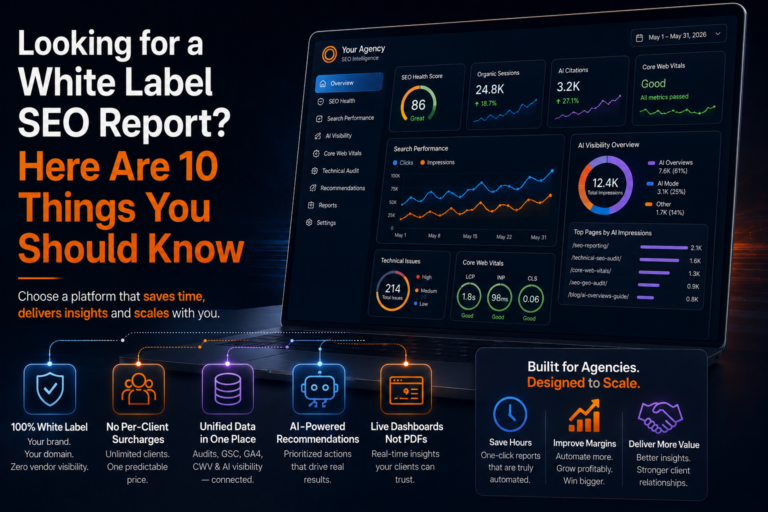
White Label SEO Reports: 10 Things Every Agency Should Know
Most agencies shopping for a white label SEO report focus on the wrong things. They compare pricing tiers,...

SEO Performance Trend Insights: What Long-Term Data Really Tells You About Growth
Most agencies review SEO performance month by month. However, SEO performance trends rarely follow a 30-day reporting cycle....
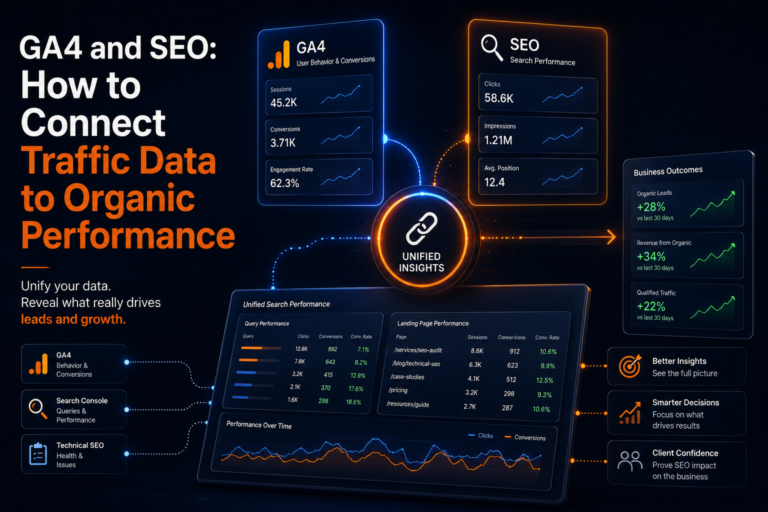
GA4 and SEO: How to Connect Traffic Data to Organic Performance
GA4 and SEO performance sit in separate dashboards for most agencies, and that separation is costing them clients....
Ready to unify your agency's SEO stack?
Stop juggling 5+ tools for one report. Zensor brings SEO audits, GA4 analytics, GSC data, and AI search tracking into a single platform.